
BARLEYmax 101 - Super grain, Super health benefits
Find out what makes BARLEYmax a super grain and how you can include it in your diet to improve your gut health
SOME HANDY TERMS
Short Chain Fatty Acids: a result of the good bacteria in your digestive tract fermenting fibre (mainly resistant starch). They fuel your digestive cells and help to keep your gut healthy.
Fibre: predominately found in grains, beans, legumes, fruits and vegetables and is made up of the indigestible parts of these foods, which pass through us relatively unchanged.
There are 3 types of fibre:
Insoluble: Draws water in to your bowels, to help soften your faeces and and support regular bowel movements. It also helps to keep us feeling full and our digestive tract healthy. Found in wholegrains and cereals, seeds, nuts, wheat bran and the skins of fruit and vegetables.
Soluble: helps to slow stomach emptying which results in you feeling fuller for longer. It also plays a role in lowering cholesterol and stabilising blood glucose levels. Found in fruit and vegetables, oats, barley and legumes
Resistant Starch: ferments in the large intestine where it assists in the production of beneficial bacteria and improves digestive health. Found in BARLEYmax, under ripe bananas, cooked and cooled potato, pasta and rice.
BACKGROUND
Colorectal cancer, cardiovascular disease and diabetes are major contributors to premature death and disability in developed countries such as Australia. Modern diets are increasingly refined, low in fibre and energy dense, all of which contribute to obesity and consequently, the aforementioned conditions. In Australia, the situation is a little different. The Australian diet appears quite high in fibre compared to other developed countries, however the prevalence of colorectal cancer is high. This lead CSIRO researchers to question the reasons why. The answer - poor intakes of resistant starch. They then began the search for an ingredient which could boost our intake of resistant starch, which lead them to BARLEYmax.
WHAT IS BARLEYMAX?
BARLEYmax is a non genetically modified wholegrain founded by the CSIRO. It contains twice the fibre of regular grains and 70% more beta glucan (helps control blood cholesterol levels) than oats . Click here to read more about oats and beta glucan
WHY INCLUDE BARLEYMAX IN YOUR DIET?
BARLEYmax contains more fibre (soluble, insoluble and resistant starch) than most other grains. This results in a healthy digestive system which is less prone to colorectal cancer and greater feelings of fullness, which is great if you are trying to lose weight. Including BARLEYmax in your diet is an easy way to increase your intake of resistant starch without making significant changes to your diet e.g. eating copious amounts of undercooked pasta or unripe bananas.
NUTRITION PROFILE

Fibre Profile of Popular Grains

Nutrition Information for 100g of BARLEYmax

Nutrition information for 100g of uncooked oats
The above tables compare the nutrient profiles of BARLEYmax and oats. The values are for 100g of the uncooked grains. Whilst it may appear that oats have more resistant starch than BARLEYmax- this is actually a little misleading. Cooking oats diminishes their resistant starch content. Eating uncooked oats is not really appealing! That’s why BARLEYmax is a good alternative - you can eat it uncooked for maximum nutrient uptake.
WHERE TO FIND BARLEYmax
BARLEYmax can be found in:
Barley+ products which consist of a variety of wraps, muesli/granola cereals and bars. Sold in Coles, Woolworths, IGA and other independent supermarkets
Edwards Sourdough - some of their bread varieties have added BARLEYmax. Sold in Coles and Woolworths
Alpine Breads - found in some of their bread varieties. Sold in Coles, Woolworths and some independent supermarkets.

Visit: https://www.thehealthygrain.com for all things BARLEYmax
Immune Boosting Supplements and Food - Fact or Fiction?
Winter season is upon us, and that means nasty colds and flus are rife. What foods can you eat to help fend off illness and are supplements worth the hype?

There’s not much to love about winter: freezing weather, grey skies and wearing 10 layers every time you step out the door. But the worst part about winter has to be colds and flus. Experts say 3 times as many people have been diagnosed with the flu this season (2019), compared to the same time last year. Your best defence? The flu vaccine (if you’re an anti-vaxxer then please unfollow, I have no time for your uneducated opinions). Disclaimer: everyone is different, please consult your doctor for medical advice specific to your situation.But what about the gigantic and very wealthy world of supplements? Can they play a role in supporting your immune system? And can food help prevent you getting sick? – let’s find out!
Food – What Can Help to Boost Your Immunity?
FIBRE
80% of your immune system exists in your gut, which makes sense when you think about the fact that everything you put in to your body, passes through your digestive system. So, if you want to support your immune system – one of the best things you can do is look after your gut and gut microbiome!
When you eat foods rich in fibre (e.g. grains, veggies and fruit), the good bacteria in your gut breakdown the fibre. This process results in the production of short chain fatty acids (SCFAs). These SCFAs play a role in reducing inflammation, which helps to protect the lining of your gut from bugs that could potentially make you sick.
VERDICT: Include fibre in your diet to improve immune function and health
FERMENTED FOODS
Fermented food ingestion plays a similar role to fibre consumption, in that it supports your gut microbiota. Fermenting food increases its bacteria content. When ingested, this bacteria makes its way to your gut and positively influences the gut microbiome by increasing good bacteria numbers. Fermented foods include sauerkraut and kimchi, yoghurt, kefir, natto/miso and kombucha. Scientific evidence is lagging in this area, however, humans have been eating fermented foods for thousands of years and whilst they won’t cure all of your ailments, they may certainly work to improve your overall and gut health.
VERDICT: Not 100% backed by science, which is still lagging in this area, but a whole lot cheaper than most supplements and probably about as effective in improving immune function
FOODS RICH IN VITAMIN A
Found in: Leafy green vegetables, orange and yellow vegetables, oily fish, milk, eggs etc.
Vitamin A is crucial for maintaining mucus membranes and epithelium in your airways and digestive tract. Having healthy airways and a healthy digestive tract ensures that your body has the best physical defence to invading bugs.
VERDICT: Include vitamin A to improve your immune function and overall health
FOODS RICH IN ZINC
Found in: Meat, oysters, fish, pumpkin seeds, baked beans, fortified cereals, etc.
Ensuring you have an adequate intake of zinc can help to decrease your chances of catching a cold or flu. Taking a zinc supplement within 24 hours of getting sick can also decrease the symptoms you may experience.
VERDICT: Include zinc to improve your overall health and immune function and lessen symptoms of colds and flus
FOODS RICH IN VITAMIN C
Found in: Capsicum (sweet peppers), strawberries, kiwifruit, oranges, broccoli, etc.
Despite popular belief, vitamin C doesn’t actually work to prevent colds from occurring nor does it reduce their severity. Research has shown however, that vitamin C can slightly reduce the duration of a cold in healthy individuals.
VERDICT: Include foods rich in vitamin C for overall health and when sick with a cold to help shorten its duration.
Supplements – Yay or Nay?
PROBIOTICS
As we discussed earlier – the best way to support your immune system is to look after your gut and gut bacteria! Probiotics are live, good bacteria that can help to maintain a healthy gut by reducing the number of bad bacteria in our digestive system. Probiotic supplements are an easy way to increase the good bacteria in your gut, however, changes in the overall composition of the gut microbiota when taking probiotics are relatively small and usually only persist with regular use of the supplement. So much research is being conducted on the gut microbiota and we still have SO much to learn.
VERDICT:At this point in time, I would suggest that using a probiotic supplement is probably not a waste of time and money and could benefit more than just your immune system with regular use.
GINSENG
A meta-analysis of 5 randomised control trials (very high quality scientific study design), found that the use of North American ginseng extracts did NOT reduce the incidence or severity of colds (when compared to a placebo). However, 2 of those studies did show that 200mg of ginseng taken twice daily for 4 months DID shorten the duration of acute respiratory infections (including colds) in healthy adults.
VERDICT:Take twice daily for at least 4 months to see a reduction in the duration of colds. Will not prevent you getting sick.
GARLIC
Garlic is said to be useful for treating and preventing colds due to limited research which suggests it has antimicrobial properties. As with all supplements, some people choose to take garlic in capsule form due to its increased potency and convenience (plus it’s probably lot nicer to swallow a garlic capsule than eat a couple of cloves of garlic!). Research is limited, and the results are too mixed to be able to conclusively say that garlic can prevent, shorten or reduce the severity of colds. It can also result in rashes and of course, bad odour.
VERDICT: Not worth the money or stinky breath.
ECHINACEA
Echinacea is a herb native to the US. Its leaves, flowers and roots are used to make supplements. Echinacea contains compounds which are said to enhance the immune response. A large review of randomised control trials, found that Echinacea is ineffective in preventing and treating colds. Another review of scientific studies trailing the use of Echinacea for the treatment and prevention of respiratory infections and colds in children, found no beneficial effects of its use. Echinacea use has, however, been associated with an increased incidence of rashes.
VERDICT: Will not do anything except create expensive wee. Don’t waste your money.
THE VERDICT ON SUPPLEMENTS: They should supplement your diet, not make up the majority of your nutrient intake. Nutritional needs should be met primarily from foods. Consuming nutrient-dense foods means you are receiving essential vitamins and minerals, dietary fibre and other naturally occurring substances that work together to invoke positive health effects. Supplements merely provide you with some nutrients. In some cases, fortified foods and dietary supplements may be useful in providing one or more nutrients that otherwise may be consumed in less-than-recommended amounts and this should really be the only time that supplements are used. As with everything, always ensure you don’t exceed the recommended daily intake (RDI). Exceeding your requirements will result in excretion (so you’ll be wasting your money) and can also be dangerous!
Oats 101! PLUS A Caramelised Banana Oat Recipe
Learn about the wonder of oats and discover some delicious ways to spice up your morning porridge
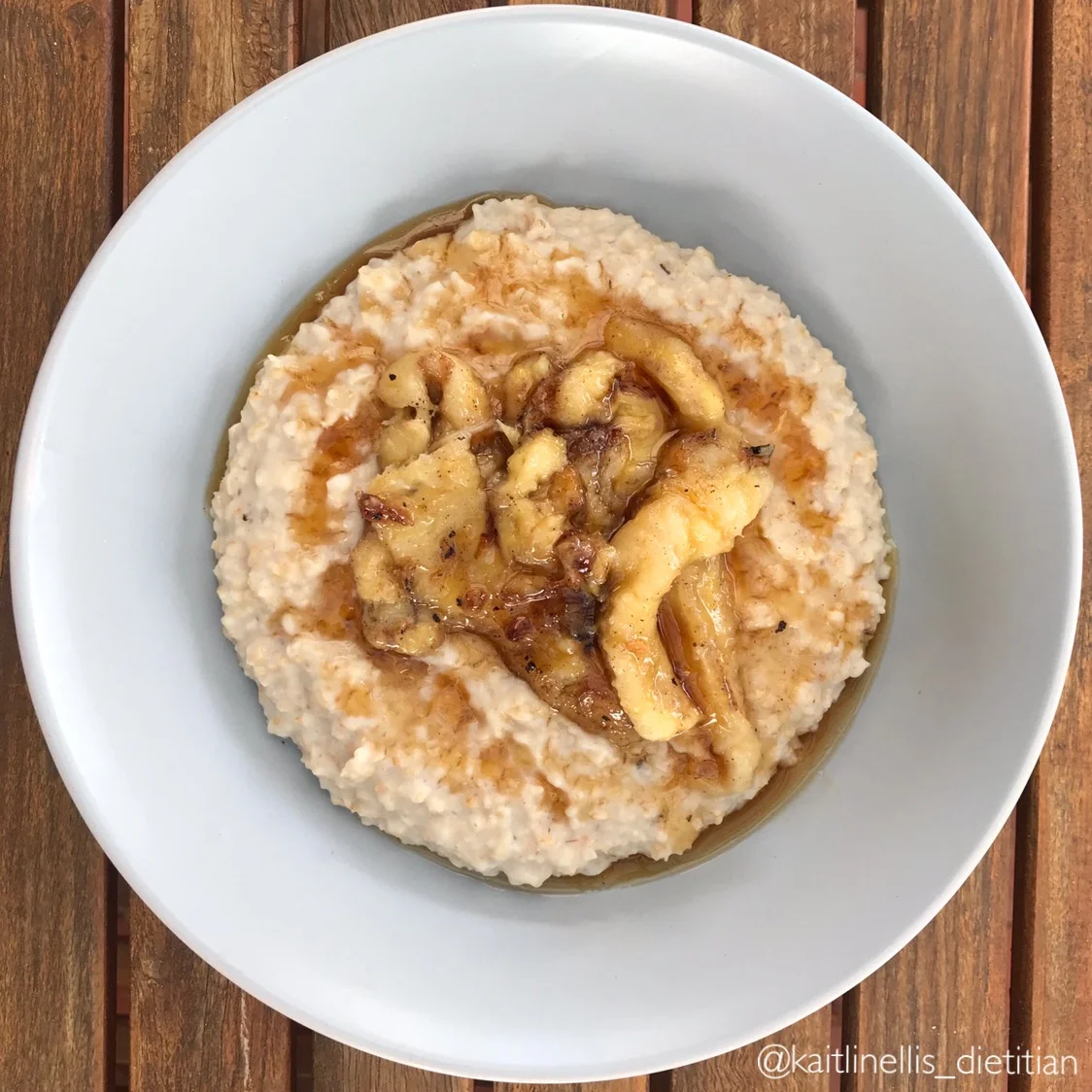
The cold weather is upon us already in Melbourne (much to my dismay) and that means porridge!!!
It might not be the most exciting breakfast, but it can be with a little help from some delicious toppings.
But first, let me explain why I love oats so much!
OATS 101
If superfoods existed - oats would be one. You really can’t go past oats as a breakfast cereal.
They are a wholegrain, meaning that all 3 parts of the grain are intact (See picture). This means that wholegrains provide both soluble (can help lower cholesterol re-absorption) and insoluble (adds bulk in your digestive tract to keep it moving - if you get what I mean) fibre and a whole lot more vitamins, minerals and antioxidants than their refined counterparts. 1/2 cup oats contains around 4g of fibre. We require 30g of fibre per day, which means that 1/2 cup oats provides around 13% of your fibre requirements.

Oats are one of the richest sources of beta-glucan, a type of soluble fibre that can help to lower cholesterol re-absorption. A 40g serve of oats provides 1g of beta glucan. We require 3g of beta glucan per day to lower cholesterol re-absorption, in conjunction with a diet low in saturated fat. (see my blog on plant sterols for more information about cholesterol and heart health.)
Oats are a source of protein. A 40g serve of oats (by themselves, without milk) provides 5g of protein. When made with 1/2 cup milk, their protein content doubles to provide 10g of protein.
In addition, they are low in sodium (salt), a common addition to most breakfast cereals.
I totally understand that plain old oats are super boring, so I like to change mine up to keep them interesting all winter long. Here’s an example of what I like to add to my oats.
Caramelised Banana Oats
[Serves 1] [15 mins from start to finish]
Ingredients
1 banana
1 tbsp of extra virgin olive oil
2 tbsp of maple syrup
1/2 tsp of ground cinnamon
A bowl of cooked oats
Method
Heat the olive oil and maple syrup in a frypan until hot. Add the cinnamon and stir to combine
Cut the banana in half length ways and add to the frypan. Cook on both sides until caramelised.
Serve on top of your oats and drizzle with the remaining pan juices.
Add some extra maple syrup if preferred.
ENJOY!
Tip: An easy way to increase your fibre and omega 3 fatty acid intake is to add nuts and seeds to your oats. Some ideas include flaxseeds, sunflower seeds, pepitas and walnuts
Plant Sterols 101
Read this if you have high cholesterol!

Cholesterol
Plant sterols are closely linked to cholesterol. To understand the importance of plant sterols, I thought it’d be useful to first explain cholesterol.
Cholesterol is a fatty substance that circulates in the blood. Cholesterol is made by the body and can also be obtained via the diet. Lipoproteins carry cholesterol around the body. There are high-density lipoproteins (HDL) and low-density lipoproteins (LDL). HDL cholesterol is known as ‘good’ cholesterol because it helps to stop cholesterol from clogging up your arteries. While LDL cholesterol is known as bad cholesterol because it has the opposite effect by building up in your arteries. A build-up of cholesterol makes your blood vessels harden and narrow and increases blood pressure. This increases your risk of heart attack and stroke. Around 1 in 3 Australians have high cholesterol. So, what can we do to assist in the reduction of high cholesterol and prevent deaths associated with high cholesterol? This is where plant sterols come in.
What Are Plant Sterols?
Plant sterols are chemically similar to cholesterol. Because of this, plant sterols actively block the absorption of cholesterol in the digestive system, which is then expelled in your poo. (See picture below if you’re more of a visual learner) This can result in a reduction of total cholesterol and LDL cholesterol (bad cholesterol).

Plant sterols are found naturally in vegetable oils, nuts, seeds and grains. Most Australians consume around 150-360mgper day. Studies have shown that a daily intake of 2-3gof plant sterols can reduce blood cholesterol levels by up to 10% in 2-3 weeks. Eating more than this amount won’t further decrease your blood cholesterol levels. A 10% reduction of blood cholesterol decreases the likelihood of a heart health event by up to 20%.
So how do you go from eating around 150-360mg to 2-3g per day?
Plant sterol enriched foods!
What Foods are Enriched with Plant Sterols?
In Australia, margarine, low fat milk, low fat yoghurt and breakfast cereals are the only food products with approval to be fortified with plant sterols.
To reach the recommended daily target of 2-3g of plant sterols, you’ll need to have about 3 standard serves of a fortified product.
The following quantities of fortified products are considered oneserve of plant sterols:
Fortified Milk = 250ml
Fortified Yoghurt = 200g
Fortified Margarine = 10g (2 tsp)
Fortified Weetbix = 1 biscuit
Who Should Have Plant Sterols?
People at risk of cardiovascular disease, particularly those with high LDL cholesterol and those with a family history of high cholesterol or diabetes. If you don’t fall in to one of these categories, there is little benefit in consuming plant sterols.
Are Plant Sterols A Cure For High Cholesterol?
Definitely not!
If you’re already taking cholesterol lowering medication (statins) – you should continue taking them. Statins and plant sterols can be used together but you should consult with your doctor and a dietitian prior to introducing them to your diet.
Statins and plant sterols in isolation are also not a cure for high cholesterol. In order to reduce your overall risk of heart disease, it’s important that you
Eat a balanced diet that includes foods from the five food groups and is low in saturated fat
Stop smoking if you currently smoke
Exercise
Limit alcohol intake
For more information on all things heart health, cholesterol and plant sterols – Visit the Heart Foundation website: https://www.heartfoundation.org.au
Thai Poached Salmon
Thai Poached Salmon

Restaurant vibes at home. Super simple, quick and luxe
Salmon is incredibly nutritious, containing:
Essential omega 3 fatty acids - these are called ‘essential’ because you must obtain them via your diet as your body can’t produce them.
Protein - 100g of salmon contains around 22-25g protein.
B vitamins - involved in many vital chemical reactions in your body - including the breakdown of food in to energy, the creation of DNA and red blood cells and the maintenance of mucous membranes (e.g skin, eyes and the nervous system)
and a whole variety of other micronutrients which keep you healthy
As well as being nutritious, salmon is also delicious!
Poaching the salmon in a wonderfully creamy and flavoursome coconut sauce, means that the fish stays moist (mmmm what a word), and gets infused with coconut-ty goodness.
I usually serve dishes like these with rice but this time I opted for vermicelli noodles and it gave the dish a great Asian vibe!
I wouldn’t be a dietitian if I didn’t tell you to serve with greens (aim for around half your plate). I chose pak choy but the choice is yours. Broccoli, snow peas, or even asparagus would be fabulous!
I hope you love this salmon dish as much as I did.
If you make it, be sure to tag me @kaitlinellis_dietitian. I’d love to see your creations!
[ Serves 4 ] [30 mins from start to finish]
Ingredients
4 small or 2 large salmon fillets
2 tbsp of extra virgin olive oil
2 garlic cloves - minced
3 cm of ginger - grated
1 tbsp of lemongrass paste
1 tbsp of brown sugar
1 tsp chilli sauce (e.g. sriracha sauce)
1 can (400g) of coconut milk - you can use light varieties but the sauce won’t thicken as much
1 tbsp of fish sauce
Zest of 1 lime
Lime juice - to taste
1 chilli - sliced (to serve)
Your choice of greens - steamed (to serve)
100g uncooked vermicelli rice noodles - cooked as per packet instructions
Method
Heat 1 tbsp of the oil in a non-stick over a medium-high heat. Add the salmon fillets, skin side up. Sear for 1.5 minutes and then turn. Sear for a further 1 minute. Remove from the pan and set aside. At this point the salmon will still be raw on the inside - this is fine!
Turn the heat down to medium-low and heat the another 1 tbsp of oil. Add the garlic and ginger and cook for around 1 minute. Add the brown sugar and stir constantly for around 30 seconds to caramelise.
Add the coconut milk, chilli sauce, fish sauce and lemongrass paste to the pan and mix to combine (make sure you scrape the caramelised bits off the base of the pan). Increase the heat to a simmer for 2 minutes.
Put the salmon back in the pan with the sauce and simmer gently for around 5 minutes or until the salmon is just cooked through.
While the salmon is cooking, cook your greens and noodles.
Remove the salmon from the pan and stir the lime zest and juice in to the sauce.
Place the noodles and greens on to your plate, top with a salmon fillet and spoon over some of the coconut sauce. Garnish with sliced fresh chilli.
ENJOY!
Dietitian, Nutritionist, Naturopath?
Food Experts. How do they all differ?

Naturopaths, Nutritionists, Dietitians, your neighbour, Pete Evans. There are so many different health professionals who are (or claim to be, cough Pete Evans cough) food and nutrition experts, after all, everyone eats food, but this definitely does not make them nutrition experts!
So, who do you see when you need food and nutrition related advice?
In this article, we will explore the differences between naturopaths, nutritionists and dietitians, so you can make a more informed decision about who will suit your needs best.
Naturopaths
In Australia, naturopaths may have a bachelor’s degree, diploma, or certificate and may, or may not be registered by a professional body. A naturopath may use herbal medicine, dietary and lifestyle advice and homeopathy to assist you. The naturopathic approach is holistic but may not always be evidence based. Naturopaths generally only work in private practice clinics. Medicare rebates are not available through naturopaths, however private health insurance rebates may be available depending on cover. (From April 1, 2019 Naturopathy will no longer be permitted to be covered under private health insurance policies)
Nutritionists
Nutritionists have a tertiary qualification in the area of nutrition, however there is no national body that assesses the qualifications of nutritionists (who are not also dietitians). This means that all nutritionists are not created equally i.e. some nutritionists have undertaken courses from less reputable providers than others. Nutritionists provide evidence-based advice related to nutrition and food and can work in public health nutrition, policy, research, community health and private practice sectors. Like naturopaths, nutritionists are not registered with Medicare but may be claimable through private health insurance.
Dietitians
Like nutritionists, dietitians are tertiary qualified (either a 4 year Bachelor degree with Honours or a 3 year Bachelor degree with a 1.5 – 2 year Masters degree). Dietitians may only be registered with the national body (Dietitians Association of Australia) and therefore Medicare, if they have completed an approved University course. Dietetic courses include substantial theory and supervised placements in clinical nutrition, medical nutrition therapy and food service management. Dietitians must complete ongoing training to ensure they can provide you with the most up-to-date, evidence-based information. Dietitians work in a wide array of areas from private practice, hospitals and aged care facilities to research, the food industry and public health. Dietitians apply the science of nutrition to the feeding and education of groups of people and individuals in health and in disease.
Dietitians:
Undertake nutrition and food research
Train health care professionals
Develop nutrition communications, programs and policies
Provide consultancy services to corporate organisations, food manufacturers, schools and health care facilities.
Assist in the dietary management of a wide array of medical conditions such as diabetes, heart disease, food allergy, gastrointestinal diseases, pregnancy, cancer, coeliac disease, liver and kidney disease and cystic fibrosis amongst a host of other conditions
Create personalised eating plans that take your medical conditions and/or personal circumstances in to account
Assess your nutritional needs and assist in correcting any deficiencies
Provide information on healthy eating, food shopping, eating out and preparing food at home

An overview of the similarities and differences between naturopaths, nutritionists and dietitians
To read more, visit https://daa.asn.au/what-dietitans-do/choosing-your-nutrition-expert/
Protein Powder 101
Everything you need to know about protein powder

Protein Powders – Are They Necessary?
Walk in to a supplement store and I guarantee you will be overwhelmed with the sheer number of supplements available. The fact that they can make entire stores that exist just to sell supplements is crazy to me. What’s even crazier is the price of some of these supplements, many of which serve NO PURPOSE WHATSOEVER. But is this the case with protein and is it something you could benefit from including in your diet?
Protein is essential for building and maintaining muscle and assists in muscular recovery post exercise. This makes protein an important part of anyone’s diet, particularly athletes and those who are working to build their muscle mass and/or strength. Protein powder is definitely not necessary. As with all things diet related – protein rich foods should be your first choice, however, if you have high protein requirements, or struggle to eat enough protein, then protein powder may be useful for you.
Types of Protein Powder
The wide range of protein supplements can be overwhelming. To assist you in choosing what is best for you, I have provided a brief overview of the main types of protein powders available
Whey Protein Concentrate (WPC) = 70-80% protein (the rest is made up of lactose and fat)
Whey Protein Isolate (WPI) = 90% protein (smaller amount of fat and lactose than WPC)
Whey Protein Hydrolysate (WPH) = made from WPC or WPI. Has shorter amino acid chains which supposedly results in faster digestion though this isn’t supported by evidence
Casein = another dairy based protein. Clots in the stomach resulting in slower digestion by the body.
Soy = A non-dairy protein source. Rapidly digested and well utilised by the body.
Hemp, Rice and Pea = Vegan protein. Not as effective as soy or milk-based protein due to the lower leucine content (See blog). Aim for 30g of protein and 1.8 -2.0g of leucine per serve
For protein to be most beneficial it is important to eat enough calories and carbs to ensure your body uses these as a fuel source over the protein you are ingesting.
It is also important to pay attention to the leucine content of protein powders. Leucine is a branched chain amino acid (the building blocks of protein) that has a critical role in activating muscle protein production. Research suggests that around 2-3g of leucine (around 20-25g of HBV protein) produces the biggest effect.
Timing and Dosage of Protein Intake
Research has shown that when protein is consumed there is a slight increase in muscle synthesis (production). The dosage that produces the maximal effect is 20-25g of high biological value (HBV) protein (HBV protein contains all the essential amino acids the human body must obtain via the diet as they cannot be made by the body). Eating more than this after exercise doesn’t increase muscle synthesis any further.
Eating protein in the hour after training will help to lengthen the protein synthesis response to exercise which will maximise muscular gains and minimise muscular losses.
Whilst it is important to obtain protein after exercise, your total protein intake over the entire day is more important than the timing of protein intake. In other words, you should focus on consuming enough protein across the entire day, rather than just consuming a post workout protein shake and not eating any other sources of protein for the rest of the day.
The amount of protein you need daily will vary greatly depending on factors such as your age, gender, activity levels and fitness goals.
Remember – more protein doesn’t = more muscle (unfortunately)
See https://www.sportsdietitians.com.au for more info